solar-powered-weather-station
built a weather monitoring station that measures temperature, humidity, pressure, particulate matter, and CO₂. The data is processed in real time, and is all housed within a 3D-printed enclosure for accurate indoor or outdoor monitoring.
Build:

Output Data:

Mechanical / Enclosure Design:
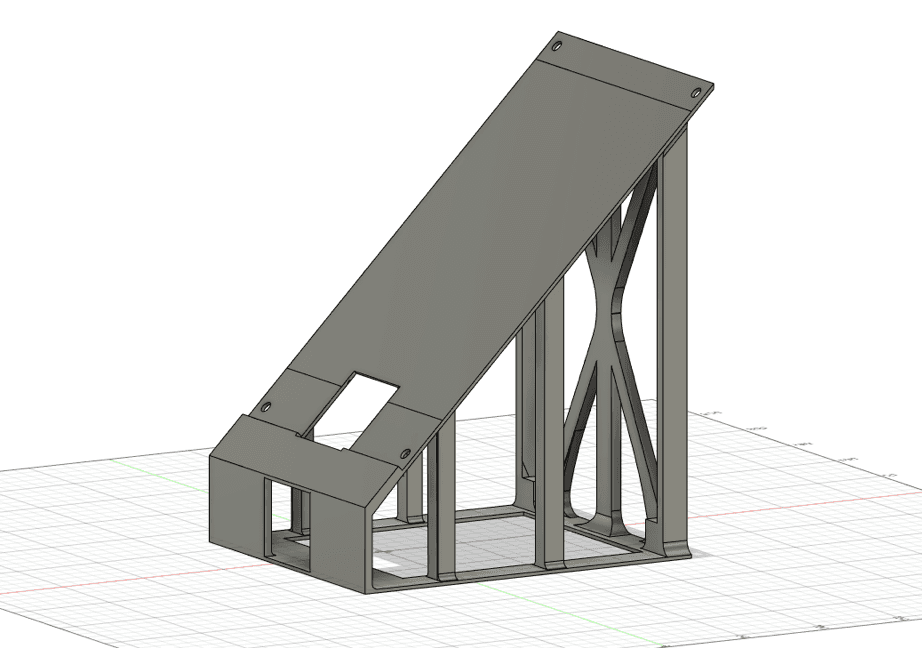
Utilized a custom 3D-printed enclosure based on a modular, layered Stevenson screen for environmental shielding
Designed internal mounting structures for:
Sensor modules
ESP32 controller board
Battery pack and charge controller
Cable routing channels for clean and protected wiring
Included a top-mounted solar panel bracket for optional off-grid power operation
Printed the housing using weather-resistant white PLA/PETG to minimize heat absorption and ensure long-term durability
Optimized vent spacing to allow natural convection airflow while preventing water ingress and limiting direct solar heating of sensors
PCB Design/Schematic
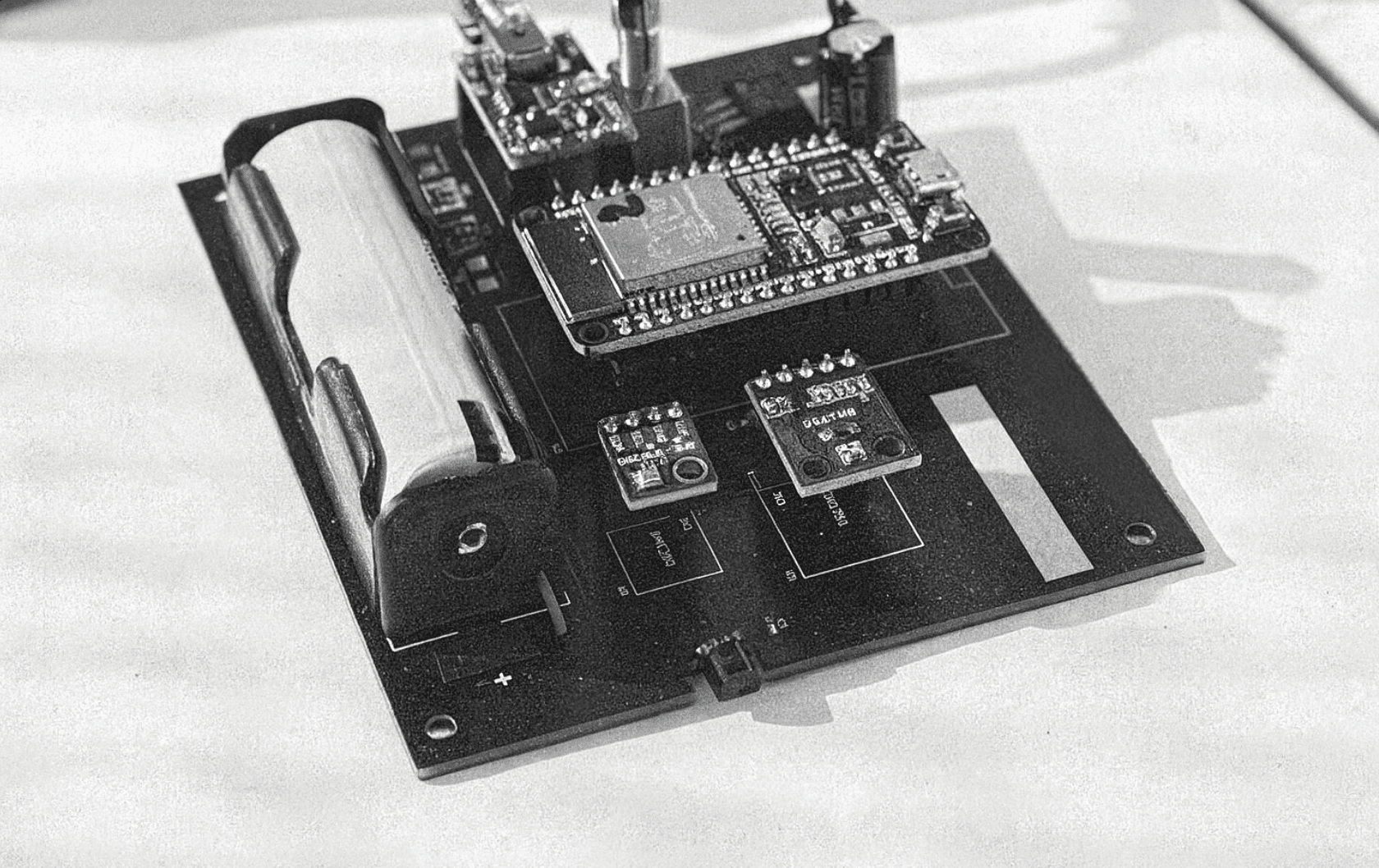
Designed a custom PCB that consolidates the ESP32, sensors, connectors, and power circuitry into a single compact board
Used strategically placed pin headers for modular sensor replacement and upgrades
Routed analog and digital lines with separation to reduce interference from the PM sensor fan motor
Implemented ground planes and decoupling capacitors for stable sensor operation
Followed outdoor-station best practices such as conformal coating options and corrosion-resistant connectors

Sensors & Sensing:
Integrated a BME280 environmental sensor to measure temperature, humidity, and atmospheric pressure with high accuracy
Added a laser-based particulate matter sensor (e.g., PMS7003 / SPS30) to capture PM1.0, PM2.5, and PM10 concentrations
Used a dedicated NDIR CO₂ sensor (e.g., SCD30 or MH-Z19B) for stable and calibrated indoor air-quality measurements
Designed proper sensor placement inside a Stevenson-style ventilated enclosure to ensure accurate airflow and protect components from direct sunlight and precipitation
Implemented sensor smoothing filters (moving average / exponential smoothing) to reduce noise from airflow turbulence and particulate fluctuations
Control & Data Processing System:
Powered by an ESP32 microcontroller, selected for its integrated Wi-Fi, low-power modes, and high-speed ADC/I²C/SPI interfaces
Developed firmware to poll sensors at fixed intervals, perform calibration routines, and compute derived metrics such as:
Absolute humidity
Air Quality Index (AQI)
Dew point
Pressure-based altitude estimation
Integrated a local display (OLED/TFT) showing key readings such as temperature, humidity, pressure, PM2.5 levels, and CO₂ concentration in real time
Implemented optional data logging and wireless telemetry via Wi-Fi to cloud dashboards (MQTT, Thingspeak, or custom API)
see also